How Venues are Shaping Their Energy Future
International conferences, trade shows, and business events require a high-performance infrastructure, which includes a reliable energy supply. As a result, event venues are increasingly focusing on how to organize energy demand and supply in a way that is both technically feasible and economically viable. Photovoltaic systems can play an important role in this regard. The new rooftop PV system at VIECON - Vienna Congress & Convention Center demonstrates how this works in practice.
Modern venues are energy-intensive buildings: lighting, ventilation, cooling systems, media technology, kitchen areas, and exhibition infrastructure all require large amounts of electricity every day. At the same time, organizers are placing greater demands on infrastructure that is both sustainable and high-performing over the long term; they are increasingly interested in the measures venues are taking to use resources efficiently and to supplement their energy supply with additional energy sources.
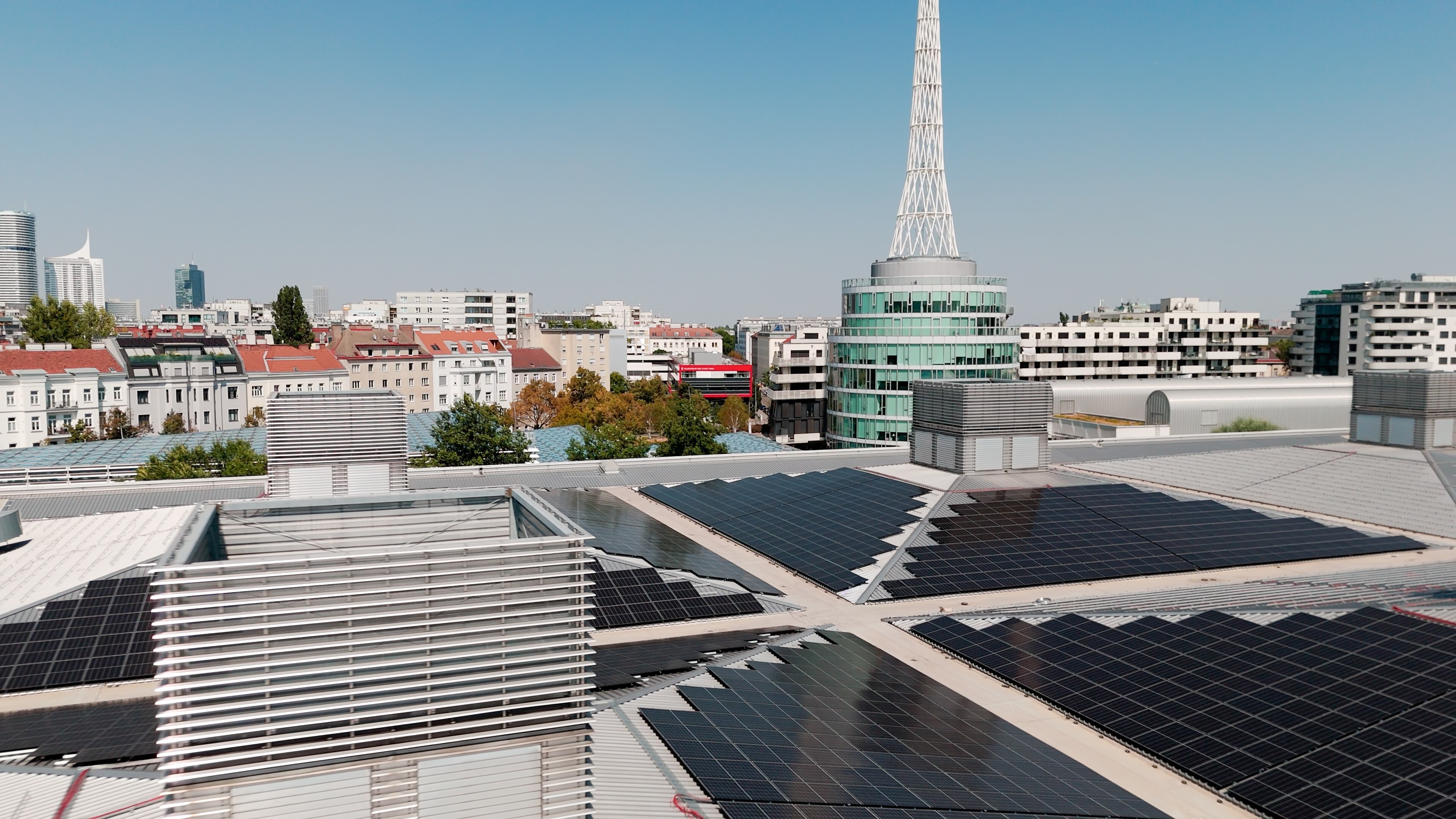
Photovoltaics can be a key component of this. It generates electricity right where it’s needed, reduces the reliance on external power, and makes it possible to meet a portion of the energy demand on-site. This is precisely the approach VIECON is taking with its new rooftop photovoltaic system on Hall A.
How an Idea Became an Infrastructure Project
The first discussions about using the hall roofs for photovoltaic systems began as early as 2022. However, before the first solar module could be installed, numerous technical, economic, and structural questions had to be answered: Can the existing roof structure support the additional load? How could the system be integrated into the existing energy infrastructure? What level of output could realistically be achieved under the conditions at the Vienna site?
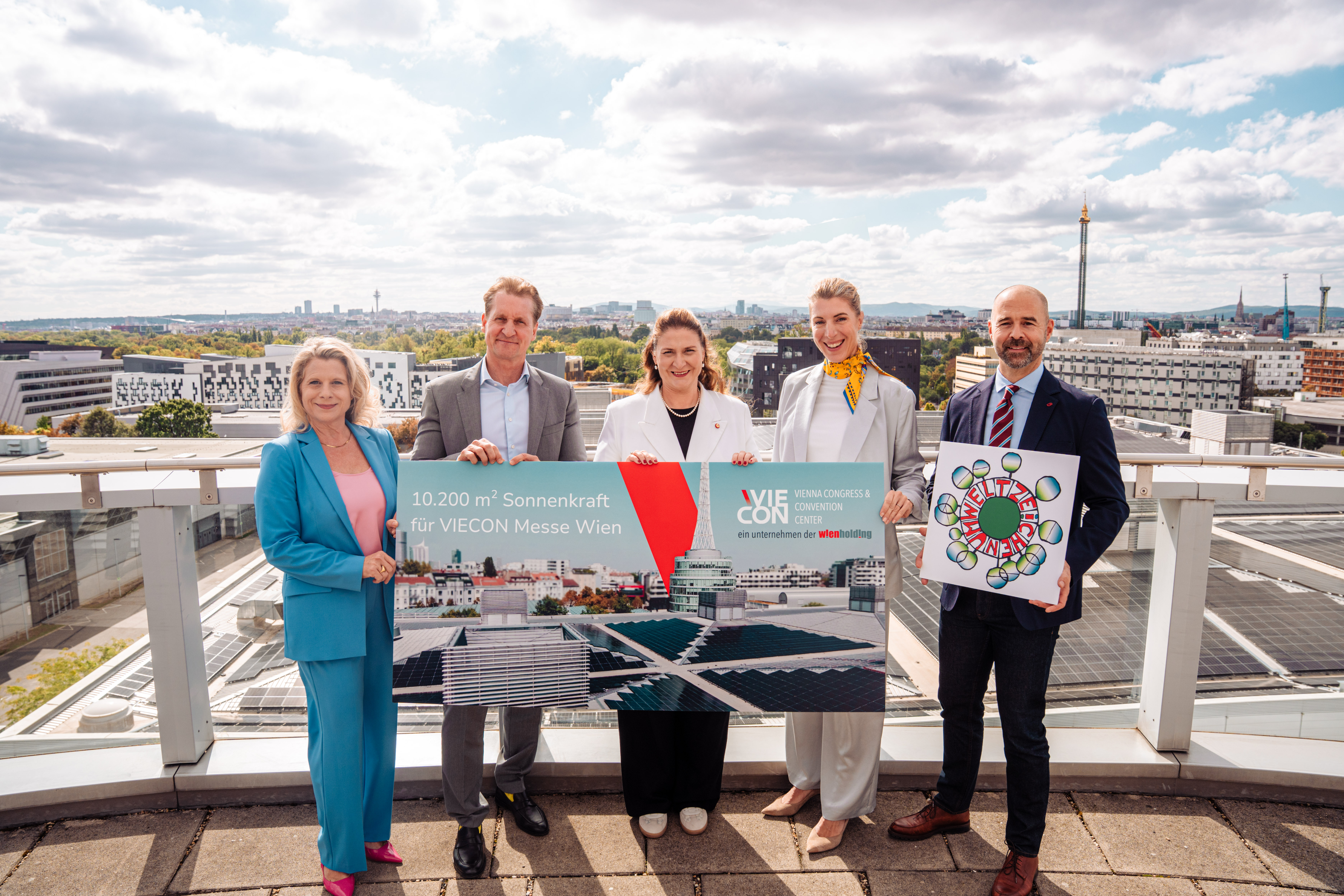
Following comprehensive technical and structural analyses, the concept was finalized in 2024. Detailed planning and preparation for implementation followed in 2025, and in early October 2026, after a six-month installation phase, the system finally went into operation.
The result is a rooftop photovoltaic system covering an area of approximately 10,200 square meters - equivalent to about 15 international-standard tennis courts.
What a photovoltaic system of this size means
The scale of the project becomes particularly apparent when looking at a few figures.
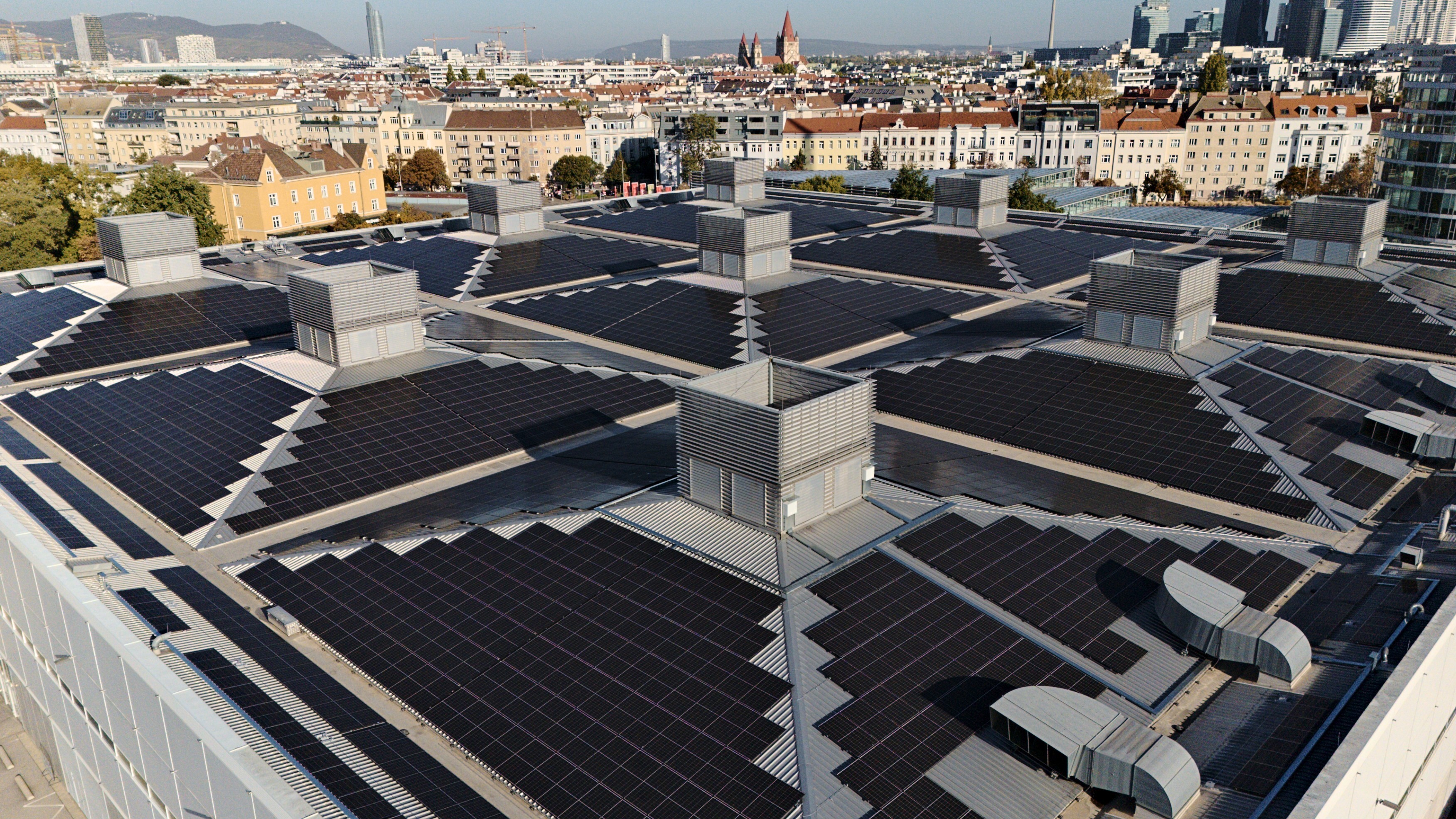
Approximately 5,100 photovoltaic modules were installed on the roof of Hall A, each weighing 21 kilograms. The modules alone thus weigh about 107 metric tons. Added to this are the substructure, inverters, wiring, and other technical components.
The biggest challenge, however, did not lie in any single trade, but rather in coordinating numerous technical and organizational requirements: structural engineering, roof construction, lightning protection, fire protection, grid connection, maintenance access, and integration into ongoing event operations all had to be considered as a unified system from the very beginning.
Construction While Conferences Take Place Next Door
A unique aspect of the project: Installation took place while events were still being held.
Between April and October, work was carried out on the hall’s roof while conferences, corporate events, trade shows, and university entrance exams continued to take place below. Deliveries, technical work, and safety measures therefore had to be closely coordinated with the event calendar.
This highlights a frequently underestimated challenge of infrastructure projects, particularly at large venues: technical modernization often must be carried out without significantly disrupting ongoing operations.
What the System Can Achieve in Everyday Use
The new rooftop PV system is expected to generate approximately 2.32 million kilowatt-hours of electricity annually. Just under 80 percent of this is to be used directly on-site.
The reason for this lies in the usage pattern of an event venue: Many energy-intensive systems, such as lighting, ventilation, cooling, and building services, operate primarily during the day. In other words, exactly when the photovoltaic system is generating electricity.
A significant portion of the energy generated can therefore be used immediately on-site. Excess electricity will be fed into the public grid.
For events, this means that during periods of generation, a portion of the energy required comes directly from the hall’s roof.
How much does photovoltaic power generation depend on the weather?
A frequently asked question about photovoltaic systems concerns their dependence on weather conditions. In fact, solar radiation, cloud cover, the season, and module temperature all influence the current level of electricity production. However, when evaluating a system from a technical and economic perspective, it is not the output on individual days that is decisive, but rather the long-term annual yield.
Based on a detailed yield simulation using climate data for Vienna, an expected annual production of approximately 2.32 million kilowatt-hours was calculated for the rooftop system at the VIECON Center.
What this implies for the future of event venues
Photovoltaic systems alone - regardless of their size - do not make an event venue sustainable. However, they can make an important contribution by generating a portion of the energy needs directly on-site and diversifying the energy supply in the long term.
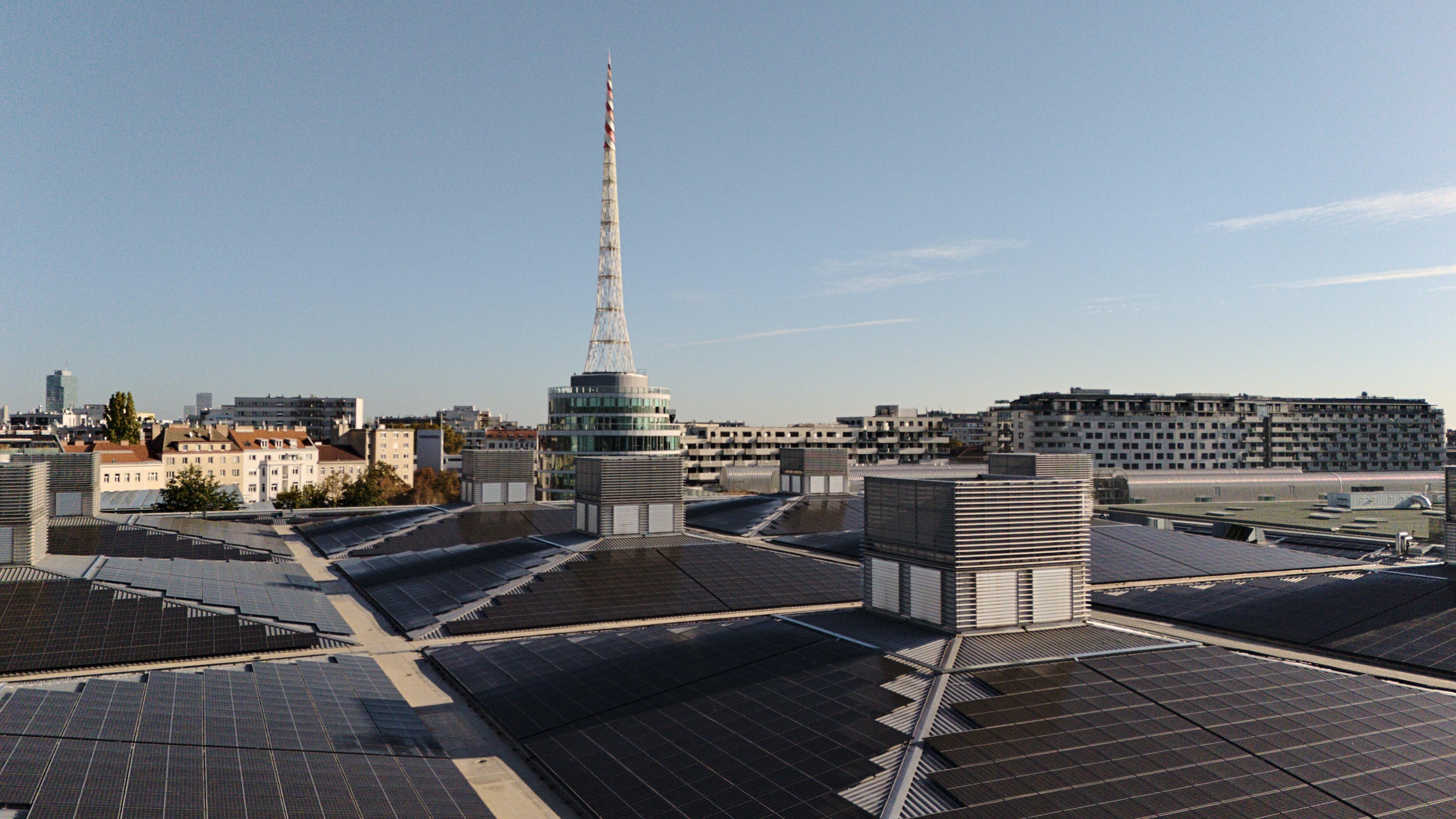
The new rooftop PV system at VIECON demonstrates the potential that can be realized on the existing building surfaces of large event venues. At the same time, the project illustrates that modern event infrastructure today extends far beyond the technology in event spaces.
It increasingly encompasses the question of how energy can be generated, used, and integrated into operations as efficiently as possible.
While international congressess, trade shows, and business events take place in the halls, a 10,200-square-meter system on the roof now generates solar power. This usually remains invisible to visitors. For the venue’s energy infrastructure, the system expands the ability to generate electricity directly on-site.
For more information on the rooftop solar power system at VIECON, click here: VIECON - Photovoltaic Rooftop System Commissioned at VIECON Center
The article describes the key technical specifications and the system’s integration into the site’s operations. No statements are made regarding specific emission reductions or environmental impacts.
Online since: 29. October 2026